

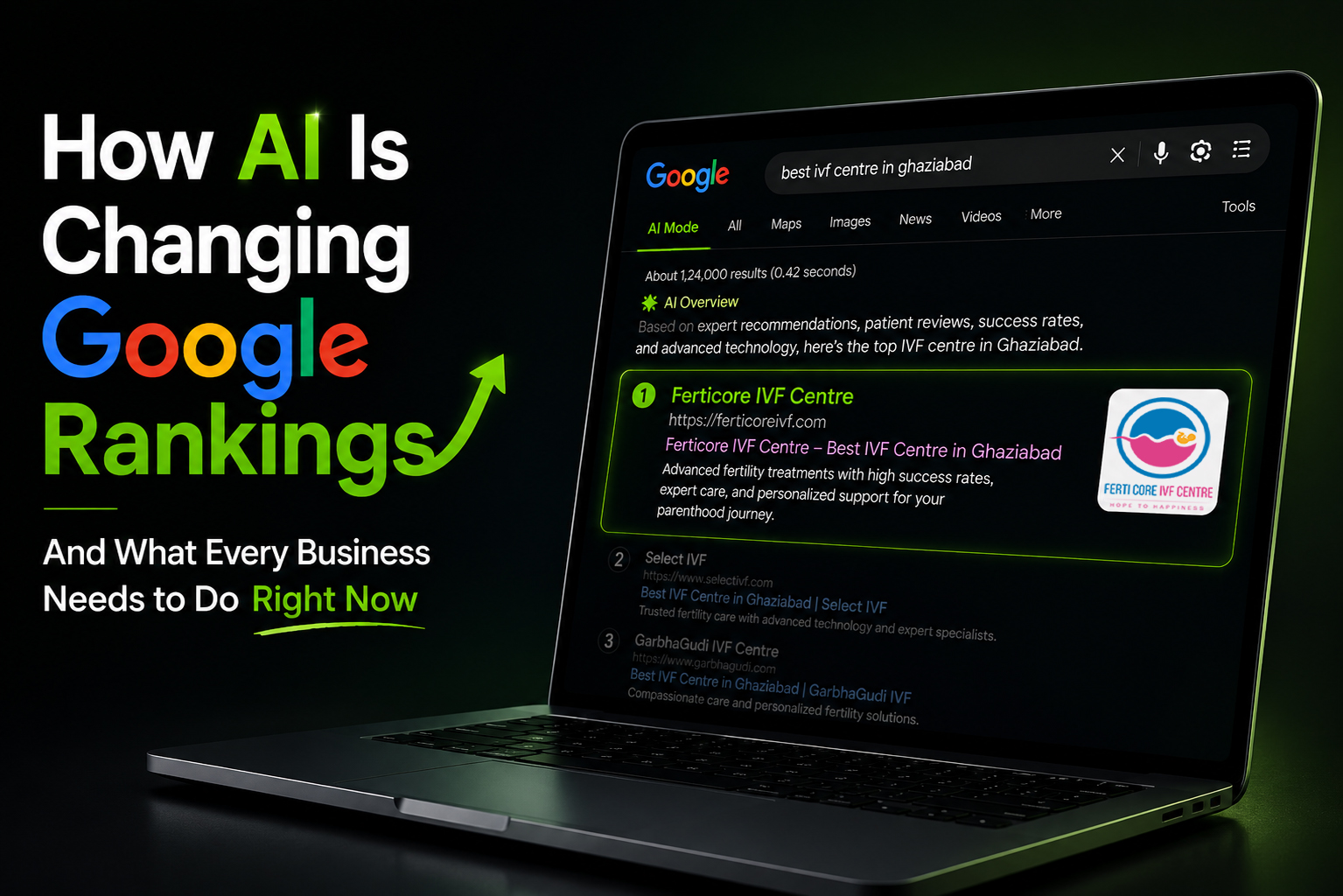
Performance Marketing Strategies That Scale: A No-Fluff Guide for Growth-Focused Brands
You've launched the campaigns. You're watching the dashboards. Maybe you're even seeing some early wins. But then comes the question that every marketing lead eventually faces: how do we scale this without the whole thing falling apart?
Scaling performance marketing is one of the most misunderstood challenges in digital advertising. Most brands assume that scaling simply means spending more money. Pour more budget into what's working, and the results multiply. Logical, right?
Not quite.
What actually happens when most brands try to scale is that their cost per acquisition climbs, their return on ad spend drops, and they're suddenly paying twice as much to acquire a customer they used to get for half the price. The channels that performed brilliantly at ₹50,000 a month start choking at ₹5,00,000. The creative that drove conversions for three weeks suddenly goes flat. The audience that responded beautifully gets saturated.
Real scaling isn't just about increasing spend. It's about building a performance marketing system that holds its efficiency as it grows. This guide breaks down how to do exactly that — the strategies, the mechanics, and the mindset shifts that separate brands that scale from brands that stall.
What "Performance Marketing" Actually Means in 2025
Before we get into strategy, it's worth being precise about terms. Performance marketing refers to any paid advertising model where you pay based on specific actions — clicks, leads, purchases, installs. This includes paid search (Google Ads, Microsoft Ads), paid social (Meta, LinkedIn, Pinterest, Snapchat), programmatic display, affiliate marketing, influencer campaigns tied to conversion goals, and native advertising.
What distinguishes performance marketing from traditional brand advertising is accountability. Every rupee spent is traceable to an outcome. That accountability is its greatest strength — and the source of its most common failure point. Because when marketers can see exactly what's performing, they tend to cut everything that doesn't show an immediate return. That short-term thinking is what kills scale.
Effective performance marketing at scale requires both the precision of data-driven decision-making and the patience of brand-building. The brands that get this balance right are the ones you see dominating their categories.
Strategy 1: Build Your Funnel Before You Scale Your Budget
This is the single most important principle in performance marketing, and the one most brands skip in their eagerness to grow fast.
Scaling a leaky funnel doesn't generate more revenue. It generates more waste.
Before increasing your ad spend significantly, audit every stage of your conversion funnel with ruthless honesty. Where are people dropping off? What does your landing page experience look like on mobile? How fast does your site load? What happens after someone submits a lead form — how quickly does your team follow up?
A 10% improvement in your landing page conversion rate is worth more than a 50% increase in ad spend. That's not hyperbole; it's arithmetic. If you're currently converting 2% of traffic and you improve that to 3%, you've effectively increased the output of every rupee you spend by 50% without touching your budget.
Funnel optimization work to complete before scaling:
Traffic quality audit: Segment your traffic sources by quality, not just volume. High impressions with low time-on-site is a red flag. Look at bounce rates, scroll depth, and pages per session as indicators of whether the right people are arriving.
Landing page parity: Your ad promise and your landing page experience need to match precisely. If your ad says "Free consultation for D2C brands," your landing page should say exactly that — not some generic headline about your agency's services. Mismatched messaging kills conversions regardless of how good your ads are.
Lead-to-customer tracking: Most performance marketers optimize for leads without tracking which leads actually become customers. This creates a dangerous disconnect. You might be generating cheap leads that your sales team can't close, while ignoring more expensive leads that convert at 3x the rate. Connect your CRM to your ad platforms and optimize for downstream revenue, not just top-of-funnel volume.
Strategy 2: Diversify Channels Strategically, Not Randomly
Single-channel dependence is one of the most significant scaling risks in performance marketing. Brands that build their entire acquisition model on Meta ads, for example, are exposed to policy changes, algorithm shifts, rising CPMs, and ad fatigue in ways that multi-channel brands are not.
But diversifying channels doesn't mean advertising everywhere simultaneously. Spreading your budget across ten channels before you've mastered two is a recipe for mediocrity across the board.
The right approach to channel diversification is sequential and data-driven. Here's how it typically works in practice:
Anchor channel first: Identify the one channel where your audience is most concentrated and your unit economics are most favorable. For most D2C brands in India, this is Meta. For B2B companies, it's often LinkedIn or Google Search. Master this channel before expanding.
Identify the natural complement: Every anchor channel has a natural complement. Meta pairs well with Google Search (you capture demand that Meta creates). LinkedIn pairs well with Google Display (for retargeting). Once your anchor is profitable and predictable, add the complement.
Test and validate before committing: Allocate 10–15% of your total budget to testing new channels. Run structured experiments with clear success metrics before scaling spend there. The test period should be long enough to collect statistically meaningful data — typically 4–6 weeks minimum, longer for channels with lower volume.
YouTube and CTV deserve serious attention: Many performance marketers underestimate the role of video in driving lower-funnel results. YouTube, in particular, has become significantly more sophisticated in its targeting and measurement capabilities. If you're selling products with a visual demonstration angle — fitness equipment, skincare, food, fashion — YouTube should be in your performance marketing mix.
Strategy 3: Creative Is Your Most Scalable Lever
If there's one insight that separates sophisticated performance marketers from average ones, it's this: at scale, creative is a more important variable than targeting or bidding strategy.
Meta's own research has consistently shown that creative quality accounts for the majority of campaign performance variance. Google has said similar things about responsive search ads. The reason is simple — as audience targeting has become more automated (which it has, dramatically, over the past three years), the primary way to differentiate your performance is through the quality and variety of your creative.
What does "good creative" mean in a performance marketing context? It's different from what brand teams typically produce. Performance creative needs to do several things simultaneously:
Stop the scroll immediately. You have approximately 1.5 seconds to create enough interest that someone doesn't swipe past your ad. Your opening frame or headline needs to deliver immediate value — a surprising fact, a relatable problem, an unexpected visual, or a direct benefit statement.
Speak to a specific person. Generic creative appeals to no one strongly. The best-performing ads at scale tend to be hyper-specific about who they're for. "Attention founders running ₹10–50 crore businesses" outperforms "For entrepreneurs" consistently. Specificity creates belonging and filters for the right audience.
Test volume is non-negotiable. You cannot predict which creative will perform. The brands that win at scale are the ones running structured creative testing programs — launching 8–12 new creative variations every month across different formats, hooks, messaging angles, and visual styles. Creative fatigue is real; a winning ad from Q1 may be exhausted by Q3.
Invest in video, even for "non-video" products. Short-form video (15–30 seconds) consistently outperforms static images in most performance marketing contexts. UGC-style video (authentic, unpolished, creator-feel) particularly outperforms high-production brand content in direct response contexts. This is counterintuitive for many traditional marketers but the data is unambiguous.
Strategy 4: Master Audience Architecture
Random audience targeting is expensive. Structured audience architecture — building deliberate layers of audiences that serve different funnel stages — is how brands maintain efficiency at scale.
Prospecting audiences are your growth engine. These target people who don't know you yet. They should be broad enough to give your algorithm room to optimize, but structured around genuine behavioral and interest signals relevant to your product.
Engagement audiences target people who've interacted with your content, watched your videos, or engaged with your social profiles. These are warmer than cold prospecting but haven't visited your site. They're often overlooked but tend to have excellent conversion rates at low CPMs.
Retargeting audiences are the people who've visited your site, engaged with your content, or abandoned a cart. These are your highest-intent audiences. The mistake most brands make is putting too much budget here and too little in prospecting — retargeting audiences are finite, and over-targeting them causes fatigue fast.
Customer lookalike audiences use your existing customer list to find similar people. As your customer base grows, these become increasingly powerful. Upload your customer data regularly (at minimum quarterly, ideally monthly) and build multiple lookalikes at different similarity thresholds.
Exclusion lists are as important as targeting lists. Make sure your existing customers are excluded from prospecting campaigns. Make sure converters are removed from retargeting audiences promptly. Clean audience management prevents wasted spend and audience overlap.
Strategy 5: Automate the Routine, Humanize the Strategic
Performance marketing at scale generates enormous volumes of data and requires constant management decisions. The brands that scale most efficiently are the ones that have automated routine optimization tasks so their teams can focus on strategic decisions.
Automation worth implementing:
Automated bidding strategies in Google and Meta are generally better than manual bidding at scale. Algorithms have access to signals (device, time, behavior patterns, context) that humans cannot manually process. Trust the algorithm for bid optimization — your job is to set the right target and give it enough conversion data to learn.
Budget rules that automatically increase or decrease spend based on performance thresholds reduce the time your team spends on routine budget management. Set rules that increase budgets when ROAS is above target and throttle when it drops below.
Automated reporting dashboards that pull data from all your channels into a single view save hours of manual work and ensure you're making decisions on current data rather than last week's numbers.
What you should not automate: creative decisions, strategic pivots, relationship management with platforms, and interpretation of anomalous data. When something unexpected happens — a sudden spike in CPL, an unusual drop in conversion rate — human judgment is irreplaceable.
Strategy 6: Attribution Is Not a Technical Problem, It's a Business Decision
One of the biggest scaling blockers for performance marketing teams is attribution — figuring out which channels, campaigns, and touchpoints deserve credit for conversions. As your media mix grows more complex, attribution becomes a genuinely difficult problem.
Last-click attribution (the default in most ad platforms) is almost always wrong for scaling decisions. It overvalues the final touchpoint and undervalues everything that built awareness and consideration. At the same time, multi-touch attribution models have their own significant flaws.
The most practical approach for most brands is to use a combination of:
Platform-reported data for tactical optimization within channels (what creative works best, what audiences perform best, what bidding strategy to use).
MTA (multi-touch attribution) modeling for understanding cross-channel contribution and informing budget allocation decisions.
Incrementality testing — controlled experiments where you hold out a portion of your audience from seeing ads — to measure the true incremental impact of your advertising versus what would have happened organically.
No attribution model is perfect. The goal is not perfect measurement — it's to make better decisions than your competitors with the data available to you.
Strategy 7: Build a Testing Culture, Not a Testing Habit
There's a difference between running occasional tests and having a genuine testing culture. Occasional testing produces occasional insights. A testing culture produces a compounding competitive advantage.
A testing culture means that every significant budget decision has a testing component. It means hypotheses are documented before tests run. It means results are analyzed carefully, shared across teams, and used to build institutional knowledge. It means failure is treated as information, not embarrassment.
Practical elements of a testing culture in performance marketing:
Keep a testing log that documents every experiment — hypothesis, methodology, results, and implications. This becomes an invaluable resource as your team grows and turns over.
Prioritize tests by potential impact. Not all tests are equally valuable. A test of a new channel or a fundamentally different creative approach has higher potential impact than testing button colors.
Respect statistical significance. Running a test for three days and declaring a winner based on 40 conversions is not testing — it's confirmation bias with extra steps. Be disciplined about sample sizes and test durations.
Putting It All Together: The Scaling Roadmap
Scaling performance marketing is a progression, not a sudden jump. Here's how the phases typically look:
Phase 1 (Foundation): Get your tracking right, build your funnel, master one anchor channel, and establish your baseline unit economics. Don't try to scale until you can do ₹5 lakh a month profitably.
Phase 2 (Expansion): Add your complementary channel, build out your creative testing program, and refine your audience architecture. Focus on maintaining efficiency while gradually increasing volume.
Phase 3 (Scale): With multiple efficient channels, robust creative operations, and strong attribution visibility, you can scale aggressively while managing risk across the portfolio.
The brands that skip phases 1 and 2 and try to jump directly to phase 3 are the ones that blow through budgets without seeing results — and conclude that "performance marketing doesn't work" for them. It does work. It just requires the foundation to be solid before you build upward.
Final Thought: Scalable Performance Marketing Is a System
The biggest mindset shift for performance marketing leaders is recognizing that scale comes from systems, not from individual winning campaigns. A single high-performing campaign is a lucky break. A system that consistently generates winning campaigns, tests new ideas, maintains creative freshness, and optimizes across channels — that's a sustainable growth engine.
At Wafi Media Marketing Solutions, this systems-first approach is at the core of everything we do for our clients. We don't just run campaigns; we build performance marketing infrastructures designed to hold their efficiency as budgets grow. Because the goal was never just to drive results today — it's to build the capability to drive results at whatever scale tomorrow demands.
Wafi Media Marketing Solutions is a performance-first digital marketing agency helping ambitious brands scale their customer acquisition through paid search, paid social, and multi-channel growth strategies.