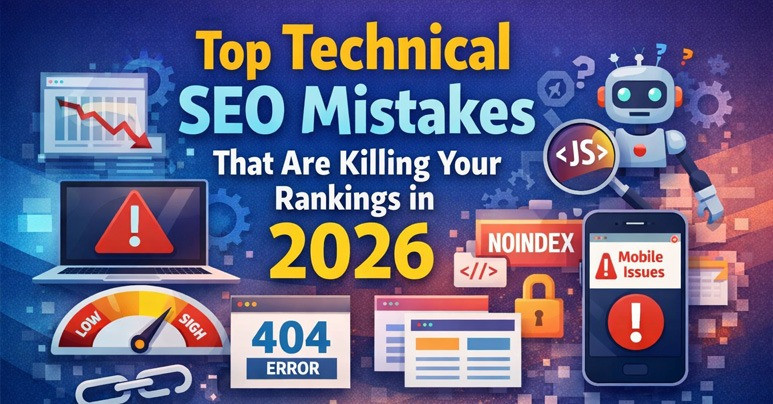
Search engines are smarter than ever, but they still depend on one thing: a technically sound website. In 2026, technical SEO is no longer just a backend task—it directly affects rankings, visibility, and user trust.
Many websites lose organic traffic not because of poor content, but due to hidden technical errors. Let’s explore the most damaging technical SEO mistakes and how to fix them before they impact your rankings.
1. Slow Website Performance and Poor User Experience
Page speed remains a critical ranking factor. A slow-loading website frustrates users and signals poor quality to search engines.
Common problems include:
• Heavy images and unoptimized media files
• Excessive JavaScript execution
• Slow server response times
How to fix it:
• Compress images and use modern formats
• Reduce unnecessary scripts
• Enable browser caching and use a CDN
A faster site improves engagement, lowers bounce rates, and boosts rankings.
2. Search Engines Can’t Crawl or Index Your Pages
If your pages aren’t accessible to search engine bots, they simply won’t rank—no matter how valuable the content is.
Frequent issues:
• Important pages blocked by robots.txt
• Incorrect noindex tags
• Broken internal links
• Missing or outdated XML sitemaps
How to fix it:
• Regularly audit crawl and index reports
• Ensure important pages are indexable
• Maintain a clean and updated sitemap
3. JavaScript-Heavy Pages Without Proper Rendering
Many modern websites rely on JavaScript frameworks, but improper implementation can hide content from search engines.
Common mistakes:
• Content loading only after user interaction
• Navigation links inaccessible to bots
• Delayed rendering of critical page elements
How to fix it:
• Use server-side rendering or pre-rendering
• Make sure core content loads in HTML
• Test pages using URL inspection tools
4. Duplicate Content Confusing Search Engines
Duplicate URLs weaken ranking signals and cause search engines to struggle with prioritization.
Typical causes:
• HTTP and HTTPS versions both accessible
• URL parameters creating multiple versions
• Trailing slash inconsistencies
How to fix it:
• Use canonical tags correctly
• Redirect duplicate URLs with 301 redirects
• Maintain a consistent URL structure
5. Weak Internal Linking Structure
Internal links guide search engines and distribute authority across your site.
What goes wrong:
• Important pages buried deep
• Orphan pages with no internal links
• Generic anchor text
How to fix it:
• Link strategically to key pages
• Use descriptive anchor text
• Keep essential pages within a few clicks
6. Mobile Optimization Gaps
With mobile-first indexing, Google evaluates your mobile site before the desktop version.
Common problems:
• Missing content on mobile
• Slow mobile loading times
• Poor usability on small screens
How to fix it:
• Ensure content consistency across devices
• Improve mobile page speed
• Optimize for touch navigation
7. Missing or Incorrect Structured Data
Structured data helps search engines understand your content and enables rich search results.
Common errors:
• No schema markup at all
• Incorrect schema types
• Validation errors
How to fix it:
• Add relevant schema markup
• Validate structured data regularly
• Keep schema aligned with page content
8. Security and HTTPS Issues
Website security affects trust, rankings, and user confidence.
Issues to watch for:
• Mixed content warnings
• Expired SSL certificates
• Outdated security protocols
How to fix it:
• Enforce HTTPS sitewide
• Fix insecure elements
• Renew SSL certificates on time
Conclusion
Technical SEO is the backbone of long-term organic growth. In 2026, websites that ignore technical health will struggle to compete, even with excellent content and strong backlinks.
By eliminating these technical SEO mistakes, you can:
• Improve crawlability and indexing
• Deliver a better user experience
• Protect and grow your search rankings


