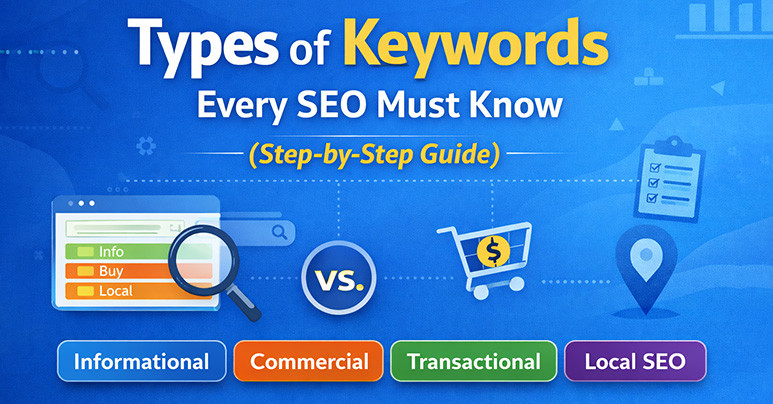
Keyword research is the backbone of SEO. If you understand why people search and what stage of decision-making they’re in, ranking becomes easier and conversions increase naturally.
In this blog, we’ll break down the most important keyword types every SEO must know, explained in simple language with real-world examples. Whether you’re a beginner, blogger, freelancer, or business owner—this guide will help you choose the right keywords, not just high-volume ones.
1. Informational Keywords (Learning Stage)
Meaning:
The user wants to learn or understand something.
Examples:
• “what is SEO”
• “how to speed up a website”
Why they matter:
Informational keywords are perfect for blog posts, guides, and tutorials. They attract users at the very beginning of their journey and help you build trust and authority.
Most websites get their first SEO traffic from informational keywords before anything else.
Best content type:
Blogs, how-to guides, tutorials, explanations
2. Navigational Keywords (Go-to Site Searches)
Meaning:
The user wants to reach a specific website, tool, or page.
Examples:
• “semrush login”
• “google search console”
Why they matter:
If people are searching your brand or platform name, these keywords are high-intent and easy to win. They usually convert very well because the user already knows where they want to go.
Best content type:
Brand pages, login pages, official resource pages
3. Commercial Keywords (Research before Buying)
Meaning:
The user is considering a purchase and comparing options.
Examples:
• “best SEO agency in Jaipur”
• “SEO services pricing India”
• “Semrush vs Ahrefs”
Why they matter:
These keywords bring users who are very close to buying, even if they haven’t decided yet. They work extremely well for comparison articles and service pages.
Best content type:
Comparison blogs, service pages, “best of” lists
4. Transactional Keywords (Action Stage)
Meaning:
The user is ready to buy, book, hire, or download.
Examples:
• “hire SEO expert India”
• “SEO services quote”
• “buy Shopify SEO service”
Why they matter:
These are your money keywords. Users searching these terms are ready to take action immediately.
Best content type:
Landing pages, sales pages, pricing pages with strong CTAs
5. Short-Tail / Head Keywords (Broad & Competitive)
Meaning:
Very short and broad keywords.
Examples:
• “SEO”
• “digital marketing”
Why they matter:
They have massive search volume but unclear intent and extremely high competition. New websites usually struggle to rank for them.
Best use:
Brand awareness and long-term authority building
6. Long-Tail Keywords (Specific & Clear Intent)
Meaning:
Longer and more detailed search phrases.
Examples:
• “SEO services for small business in Jaipur”
• “how to fix slow WordPress site without plugins”
Why they matter:
Long-tail keywords are easier to rank for and match user intent better.
According to research by Ahrefs, 94.74% of keywords get 10 searches per month or less—which means long-tail keywords are not “rare,” they are the norm.
Best content type:
Highly targeted blogs, niche service pages, FAQs
7. Branded Keywords (Brand Name Included)
Meaning:
The search includes a brand name.
Examples:
• “Yoast SEO settings”
• “Shopify SEO app”
Why they matter:
These keywords have higher trust and click-through rates because the user already recognizes the brand.
Best content type:
Reviews, tutorials, comparisons, setup guides
8. Non-Branded Keywords (Discovery Stage)
Meaning:
Generic searches without any brand name.
Examples:
• “SEO services India”
• “technical SEO checklist”
Why they matter:
These keywords help you reach new audiences who don’t know your brand yet.
Best content type:
Service pages, educational blogs, guides
9. Local / “Visit-in-Person” Keywords
Meaning:
User wants a local result near their location.
Examples:
• “SEO agency near me”
• “SEO services Jaipur”
Why they matter:
Local keywords are faster to rank and extremely valuable for service-based businesses. Google often shows maps and local packs for these searches.
Best content type:
Local landing pages, Google Business Profile optimization
10. Question Keywords (Snippet-Friendly)
Meaning:
The user asks a direct question.
Examples:
• “why my page not indexing”
• “how many backlinks do I need”
Why they matter:
They are perfect for winning featured snippets if your answer is clear, short, and structured.
Best content type:
FAQ pages, step-by-step blogs, Q&A sections
11. Problem / Fix Keywords (Pain-Driven Searches)
Meaning:
User has a problem and wants a solution fast.
Examples:
• “website not showing on Google”
• “PageSpeed score low fix”
Why they matter:
These visitors are highly engaged and often turn into strong leads because you’re solving an urgent problem.
Best content type:
Troubleshooting guides, fixes, tutorials
12. Comparison Keywords (Decision Stage)
Meaning:
User is choosing between two or more options.
Examples:
• “SEO vs Google Ads”
• “Shopify SEO vs WordPress SEO”
Why they matter:
Conversion rates are high because the user is very close to making a final decision.
Best content type:
Comparison blogs, pros & cons articles
13. Which Keyword Type Saves the MOST Time?
Answer: Long-tail keywords with clear intent.
They save time because:
• Competition is usually lower
• Content is easier to write
• Google understands intent clearly
Since most keywords are low-volume anyway, stacking many long-tail wins is the most realistic SEO growth strategy.
14. Which Keyword Type Makes the MOST Money?
Answer: Transactional + Commercial keywords (especially long-tail versions).
These keywords work best because:
• Users are ready to buy or hire
• Decision-making is almost complete
• Leads and sales happen faster
Final Thoughts
Successful SEO isn’t about chasing the biggest keywords—it’s about choosing the right keyword for the right intent.
If you align your content with user intent at every stage (learning → comparing → buying), traffic becomes meaningful, rankings stabilize, and conversions grow naturally.


